
How We Use Data to Pitch Our Athletes
Something we take real pride in at CG Sports — and something I don't think enough agencies actually do — is treating data like it's part of the roster, not just a slide we dust off once a quarter. Old-school sports representation still runs almost entirely on medal count: how many golds, how many world records, how many times an athlete's stood on a podium with a flag around their shoulders. That's still a great opener. It is not, on its own, a full pitch anymore — and any agent still selling exclusively off hardware is basically showing up to a gunfight with a participation trophy.
For context, some CG Sports history for ya. Before I was an agent, I was in tech and software sales, and if that world beats one thing into you, it's that a good visual backed by real data closes more deals than a great story told on its own. So when we built Brand Camp — the process every CG Sports athlete goes through when they sign — we built it around exactly that: a real, strategic athlete brand designed to do more than just look nice. It's built to funnel visitors toward actual business opportunities, and every bit of traffic it pulls in feeds our newsletter database and our outreach lists. It's a lot of unglamorous infrastructure to set up front-of-house, which is exactly why we run every athlete through it instead of leaving them to duct-tape together a page and a prayer.
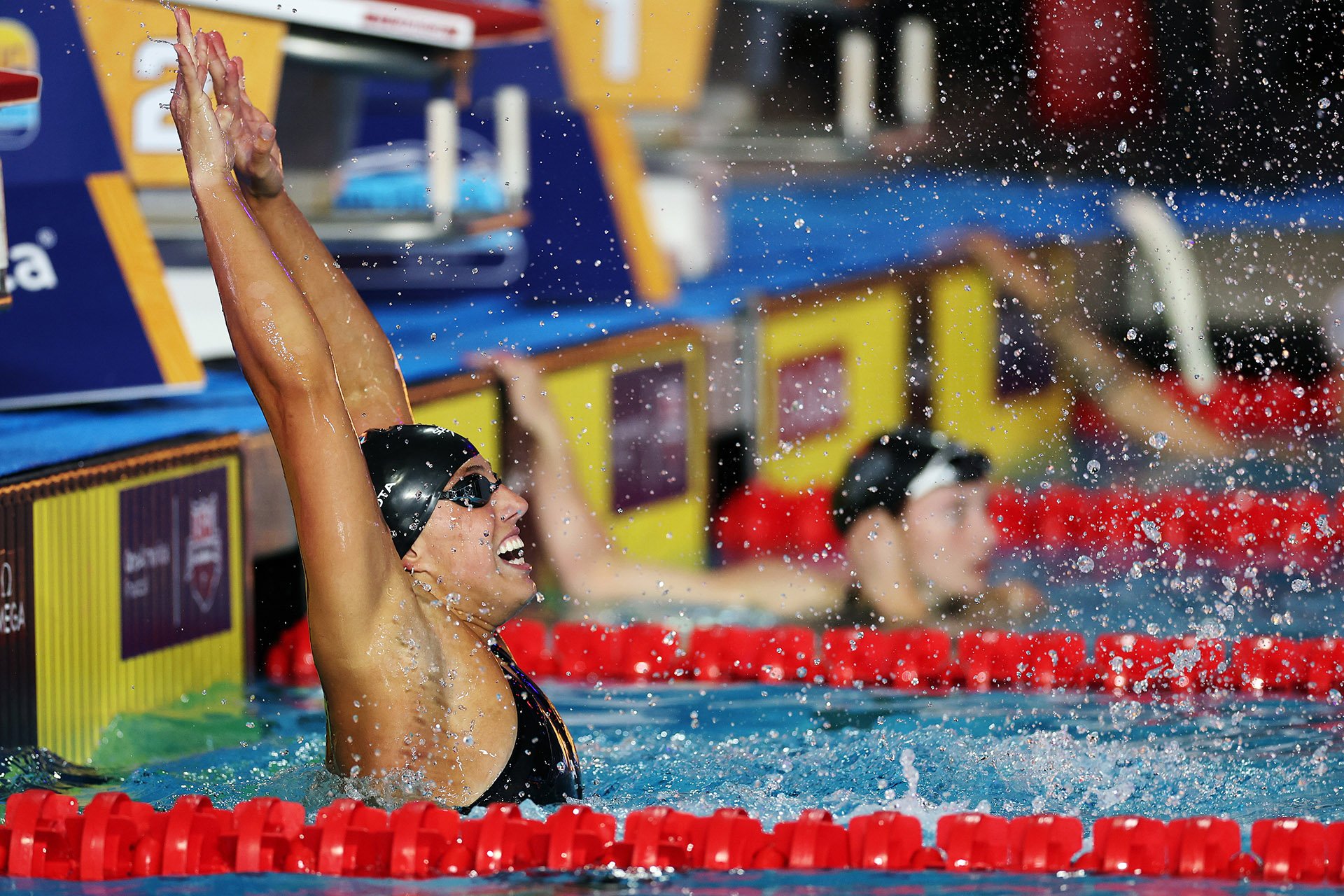
McKenzie Siroky is the case study I keep coming back to this summer. She had a phenomenal U.S. Nationals — two golds — and then, a few weeks later, an even better Pan Pacs: gold in the 100 breast in a lifetime-best 1:05.32, a silver in the 50 breast, and a second gold on USA's winning medley relay. Every one of those results, and the interviews that came with them, sent a wave of people to Google her name and to her social. When they searched, they landed on a website we'd already built and a funnel waiting for them.
And here's the part that actually matters for the business: when an athlete gets that kind of volume, it almost never stays just traffic. Within days of that spike, real inquiries started coming in organically. And for a few conversations we'd already been having with brands, we handed over that exact data mid-conversation and let it do a lot of the convincing for us.
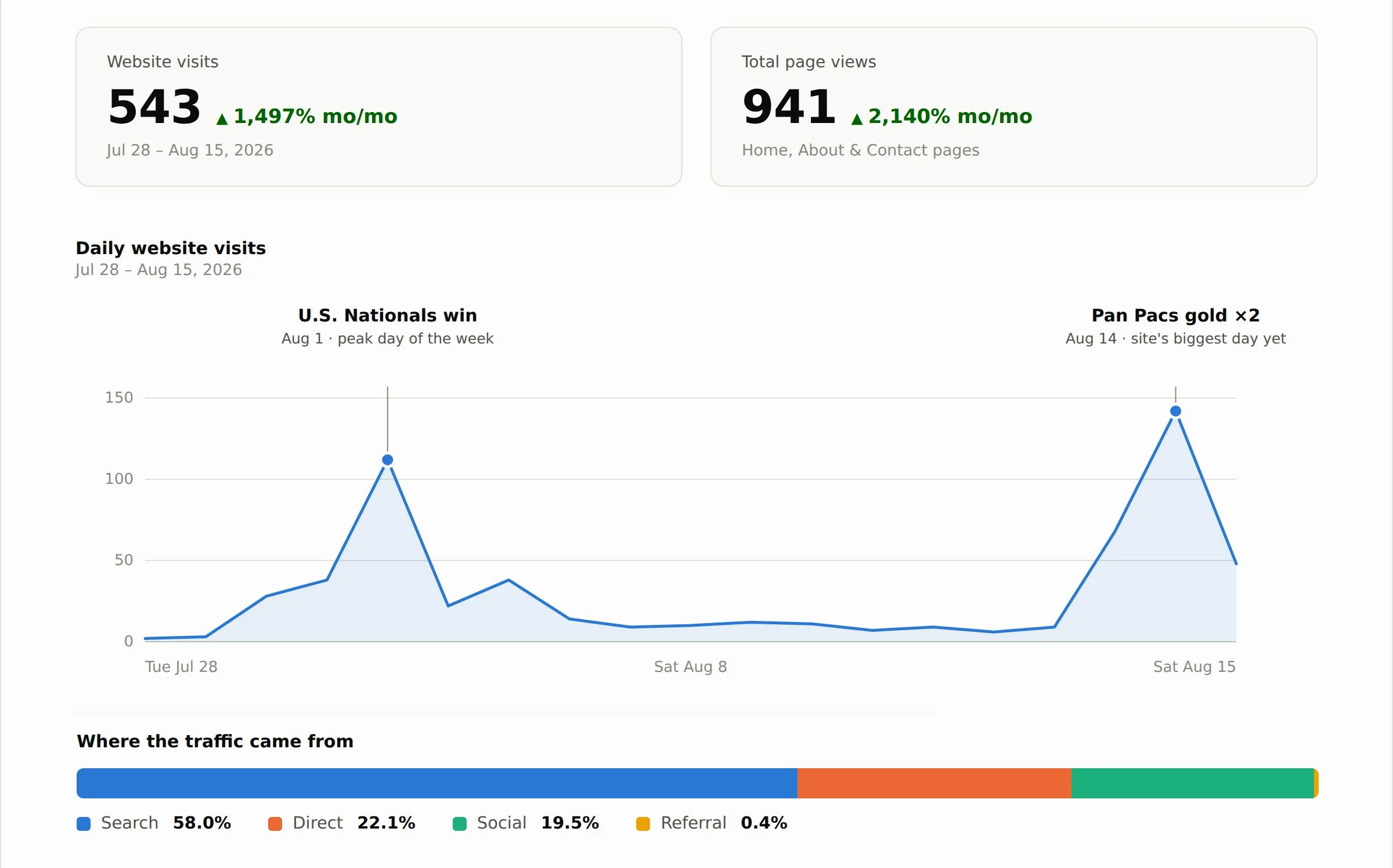
Each spike of visits to McKenzie’s site lines up with a race result. That correlation is exactly the kind of hard data that makes a sponsorship pitch land. This is the kind of hard data that most agencies never bring to a sponsorship pitch.
That's the whole point of Brand Camp — it takes genuinely tedious infrastructure work and turns it into something we can pull up in real time, at our fingertips, whenever a brand partner wants proof instead of a promise. Most of the sports and sponsorship world — agents especially — is still a little behind on this, which, selfishly, is great for us. It's also how we help athletes who aren't Olympians or Paralympians, and hopefuls who haven't had their moment yet, punch above their weight class in a genuinely crowded market.
Sometimes the story a brand needs isn't a gold medal. Sometimes it's a chart.