
More Than a Line Item: What I Heard at the Launch of the Mother in Sport Collective
On Thursday, September 17, I walked into Strava's headquarters in San Francisco for what felt like history being made.
For All Mothers+ (FAM+) chose that day to launch the Mother in Sport Collective (MISC). It is the first industry alliance of sports brands to publicly pledge to standardize maternity protections for both elite and recreational athletes. The founding members are Strava, Brooks, lululemon, Hoka, Clif, Hettas, Brodo, Altra, rabbit, Oiselle, and GU.
I was in the audience with my phone recording and my notebook full, because one of our own was on stage. CG Sports Co client Kaleo Kanahele Maclay, a four-time Paralympic medalist, mother, and Legacy Champion with FAM+, was on the day's athlete panel.
I show up in person for my clients. This business runs on relationships, and you can't build those from a spreadsheet. When an athlete I represent takes the mic, I want to hear it firsthand. After listening to Kaleo, I think every brand in our industry should hear it too.
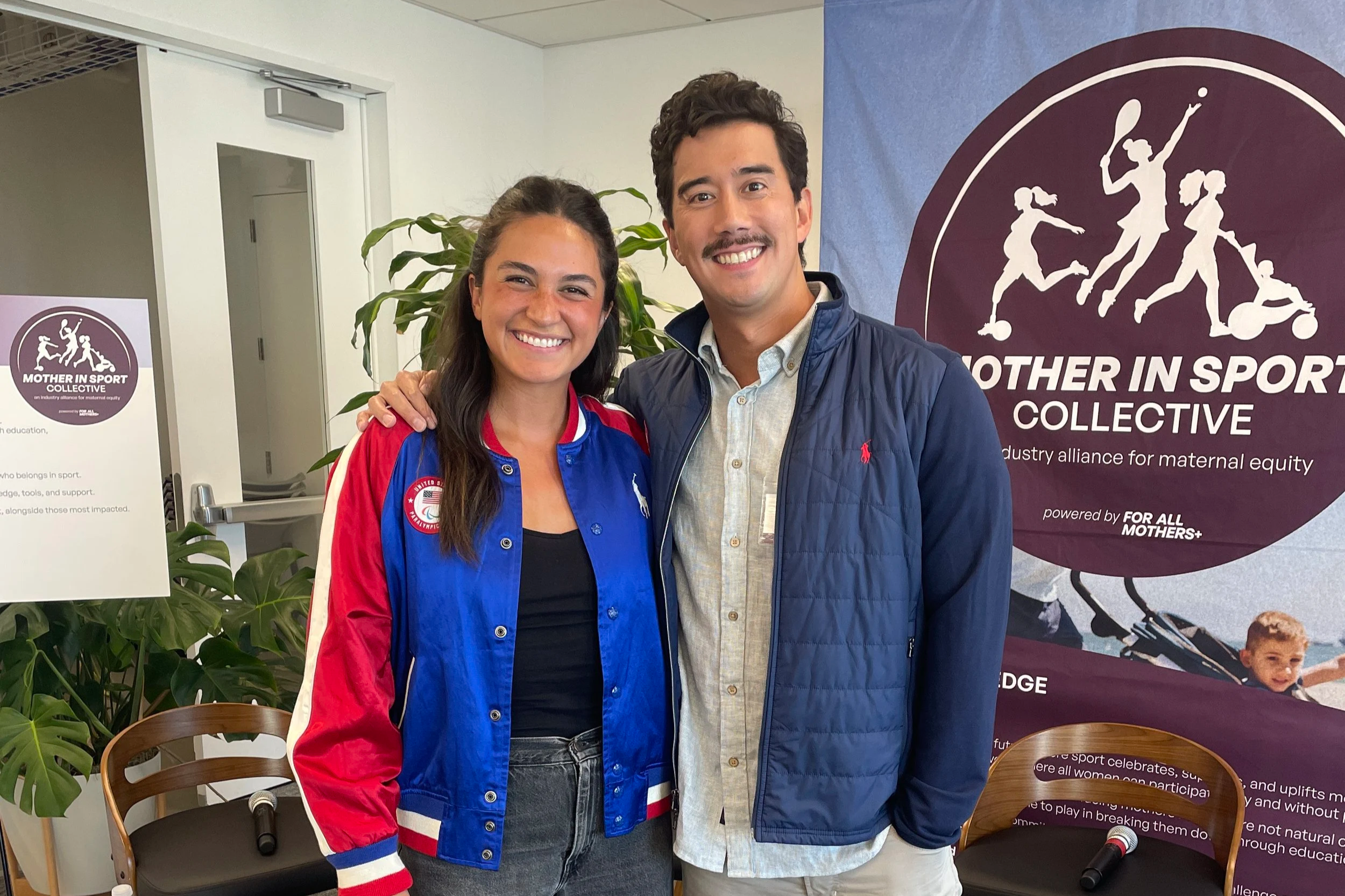
The panel: "More Than a Line Item"
The panel was called More Than a Line Item: Building the Infrastructure for Mothers in Sport. It asked why mothers have been treated as an afterthought in sport, and what it takes to build lasting infrastructure instead of one-off gestures. That means childcare, contract protections, and community.
Alison Mariella Désir moderated a lineup that spanned elite competition, the corporate side, and grassroots organizing:
Alysia Montaño, Olympic bronze medalist and FAM+ founder
Kaleo Kanahele Maclay, Paralympic medalist, mother, and Legacy Champion with FAM+
Magdalena Boulet, two-time Olympian and President of GU Energy Labs
Brian Bell, VP of Communications + Social Impact at Strava
Leah Yingling, trail and ultra runner and lululemon Global Ambassador
Kaleo Kanahele Maclay: Where inequities intersect
Kaleo has one of the most decorated résumés in U.S. Paralympic sport. She is a member of the U.S. women's sitting volleyball team, a four-time Paralympian, and a medalist at every Games she has played in: silver at London 2012, then gold at Rio 2016, Tokyo 2020, and Paris 2024. She brought a perspective to the panel that too often goes unheard, that of a mother with a disability competing at the highest level.
She opened by naming something rarely said out loud. Women in sport already start from a place of inequity. Add a disability, then add the constant need to find funding to keep competing at an elite level. You end up with athletes chasing their full potential while working against several disadvantages at once.
She was clear that fixing this can't fall only on the athletes. "We sometimes feel as though we're screaming from the rooftops," she said, describing the need for more support from brands, media, and funders. But she argued that change starts with each person's sphere of influence. That room was hers. When everyone walked out, they would carry their own spheres with them. She asked the audience to advocate for the athletes they know, the ones they don't, and Paralympians they may never have heard of.
A journey that started at 16
Then Kaleo shared her story.
She won her first Paralympic medal, a silver in London, at 16. By Rio she was 20 and standing on top of the podium. She got married that year, and months later she was unexpectedly pregnant. She was at the very start of her Paralympic career, excited to keep her child and excited about what the journey could be. Then the support dropped off.
"I personally am doing the climbing," she said, describing how she fought to secure support across the board so she could keep competing.
She thought about the Paralympians and mothers who reached that same point and didn't keep going. The two gold medals she has won since might never have happened. Instead, she made it to Tokyo and competed there while pregnant with her second son. This time she had far more support, including her work with FAM+.
"No journey in motherhood is the same"
Kaleo also spoke about the parts of pregnancy the public conversation tends to skip. People picture a simple path: pregnant, birth, postpartum. The reality has far more variations. Between her two sons, she experienced an ectopic pregnancy and the loss that came with it. She then had to face whether she could have more children afterward.
When pregnancy and disability intersect, those complexities multiply. She asked the room to think beyond the athletes we know, to all the mothers with disabilities who don't have the support elite athletes do.
Her central message to brands tied it together:
"No disability is the same. There's a spectrum of disability. And I believe the same to be about motherhood too. No journey in motherhood is the same."
Her asks for brands
Kaleo didn't just describe the problem; she gave the room concrete direction:
Ask how your decisions affect mothers with disabilities. Whenever a brand considers how a policy or program affects mothers, it should ask the same about mothers with disabilities and people with disabilities.
Put athletes with disabilities in the room. Bring them onto your boards and into your meetings so their perspective and lived experience shape decisions from the start.
Sweat the small things. Something as simple as asking whether someone needs a higher or lower chair matters. So does saying "Olympic and Paralympic" every time.
Just ask. Many people treat questions about disability as sensitive territory and fear asking the wrong one. In Kaleo's experience, the asking is what usually gets avoided. "Just asking the question makes us feel like you've thought about us enough to ask," she said.
She framed athletes as a microcosm of society and a great place to start. They are also a window into the next generation of every brand's consumers.
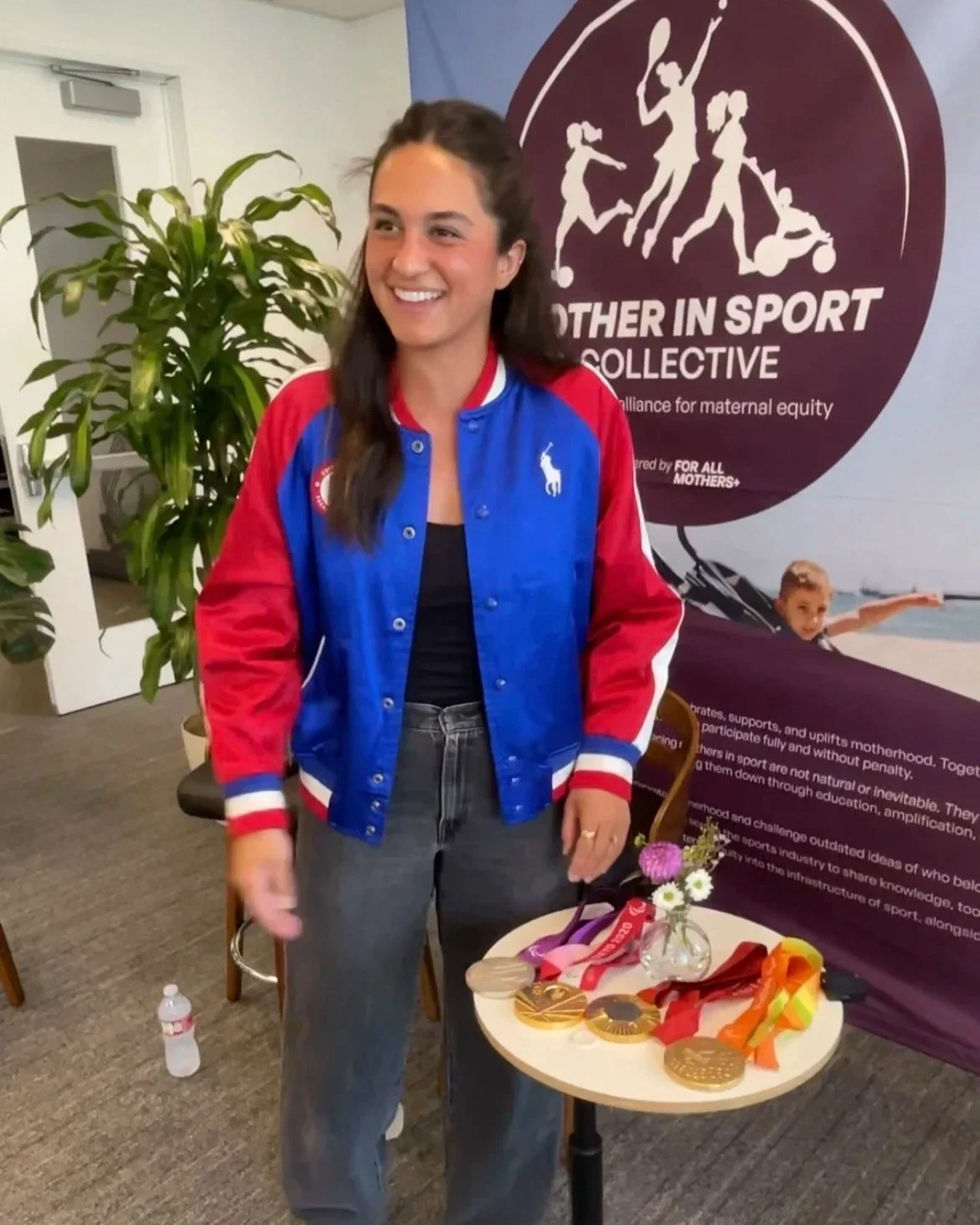
The rest of the panel
Alysia Montaño described the disconnect she has lived with. She came back after having her daughter and kept winning. Then she told a brand she wanted another child and another Olympic team, and heard that they didn't believe in her dedication. Sitting at the MISC launch, she said, felt like watching a dream come true.
Her team's recent research on the motherhood penalty in sports found that 76% of mothers reported being penalized or losing their pay altogether. "I want that number to be zero," she said. She also previewed FAM+'s upcoming Blooming Mama grant. Her hope is that someday athletes won't need it so badly, because their national governing bodies, brands, and communities will already have them covered.
Alison pushed the panel on infrastructure, not one-offs. That means support that continues "no matter who's in the seat." The line that landed hardest was that mothers should never be a miscellaneous line item. Lactation accommodations, space for parents with newborns, caregiver stipends, and supportive contract language all belong in the budget from day one.
Alysia told a story about an event organizer who, trying to do the right thing, asked whether a nursing mother could just hold it in. The lesson was to keep asking questions, then put the answers in the playbook.
Magdalena Boulet and Brian Bell reframed the business case. The real question isn't what supporting mothers costs, but what it costs not to. Magda pointed to the generational wisdom and inspiration brands give up when they treat motherhood as a burden rather than a value-add.
Brian talked about visibility and participation. "If you can see it, you can be it," he said. He warned that participation will keep dropping unless the industry builds visibility for the next generation now, and he urged everyone to act with urgency.
Leah Yingling described what made her return to competition possible. She received pregnancy deferrals from her biggest races, including one lifetime deferral, which didn't exist just a couple of years ago. Brands like lululemon congratulated her instead of hesitating when she shared her news. Through a community fund in her contract, she helped provide race-day childcare at a 50K in Utah this summer.
"I feel like I'm standing on a foundation that was built by all the mothers that came before me," she said. She was also honest that childcare remains one of the hardest daily obstacles, and that single and solo parents face challenges many of us can't imagine.
The pledge and what comes next
The panel closed with the MISC Pledge, the founding brands' public commitment to standardize maternity protections across sport. It was a fitting finish to a conversation about moving from gestures to systems.
The organization behind it all, For All Mothers+, works at the intersection of motherhood and sports to break down the systemic barriers behind the motherhood penalty. Its work spans research, grants, contractual language brands can adopt, event resources, and a Family Forward Event Directory. Its FAM+ Club is a free community for mothers and their allies.
If you're a brand, event organizer, or athlete who wants to be part of this, start at forallmothers.org.
What this means for CG Sports Co
I left with a clear takeaway. When we build partnerships for our athletes, motherhood, family, and accessibility belong in the first conversation, not in a clause added later. We'll keep asking brands the questions Kaleo raised. We'll keep pointing partners toward the MISC standards, and we'll keep championing the brands that already have answers.
Kaleo, you represented yourself, the Paralympic community, and CG Sports Co with honesty and strength. I'm proud to be in your corner.
Thank you to For All Mothers+, Strava, and the MISC founding members for creating this space. I'll see you at the next one, in person, as always.