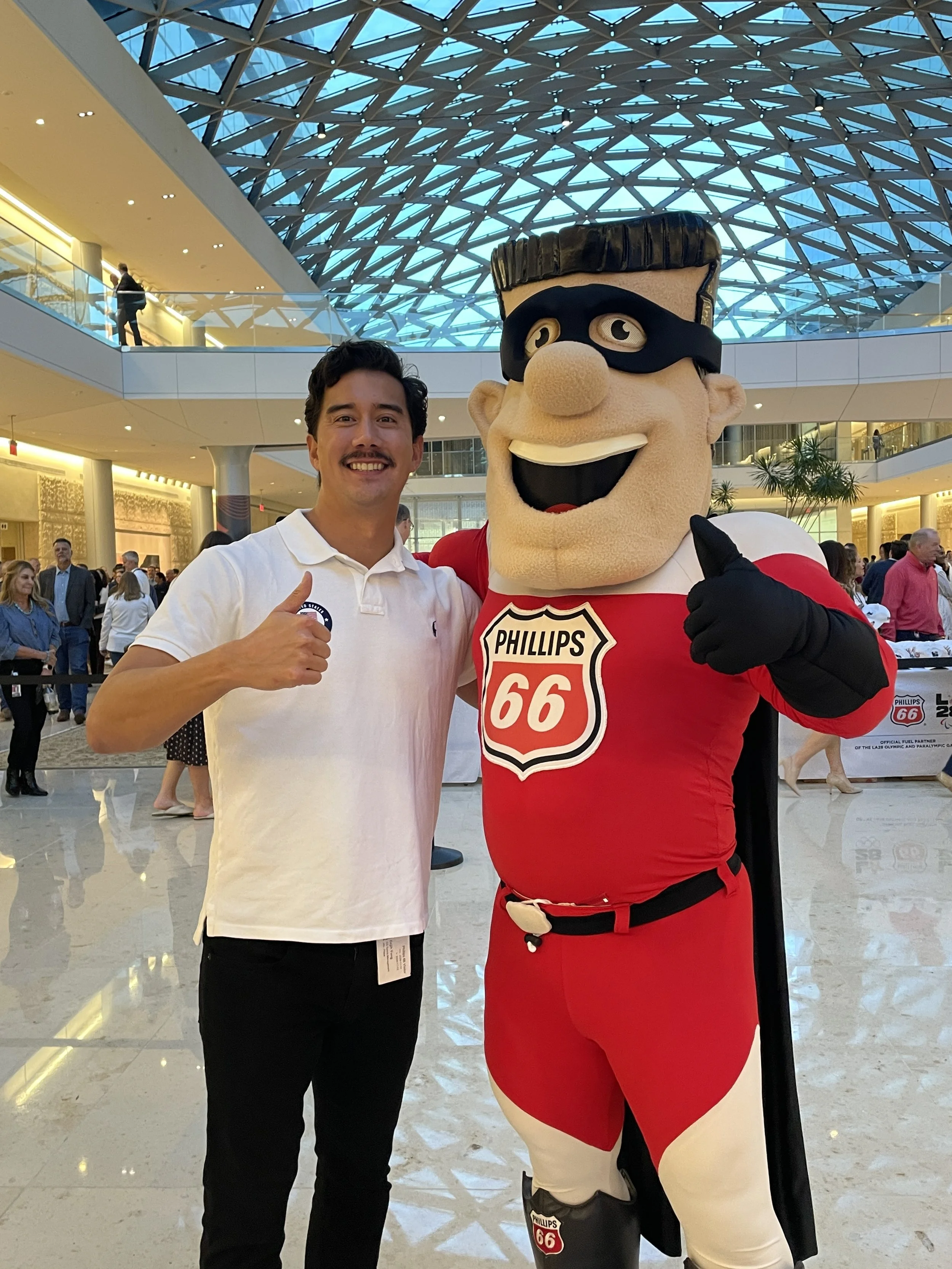
If you're sponsoring an Olympian or Paralympian and your activation plan starts and ends with social media, you're leaving the highest-ROI move on the table.
The example
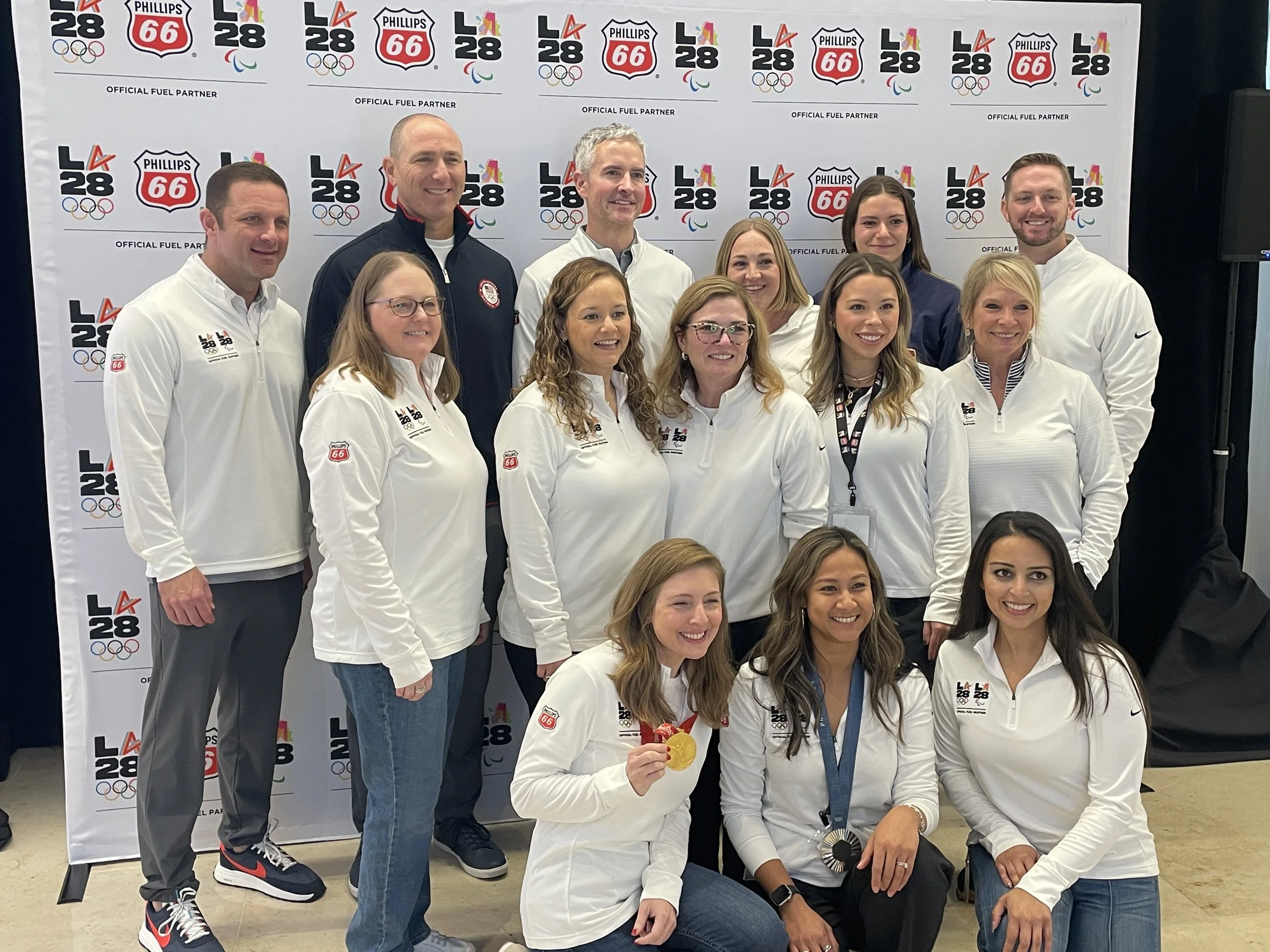
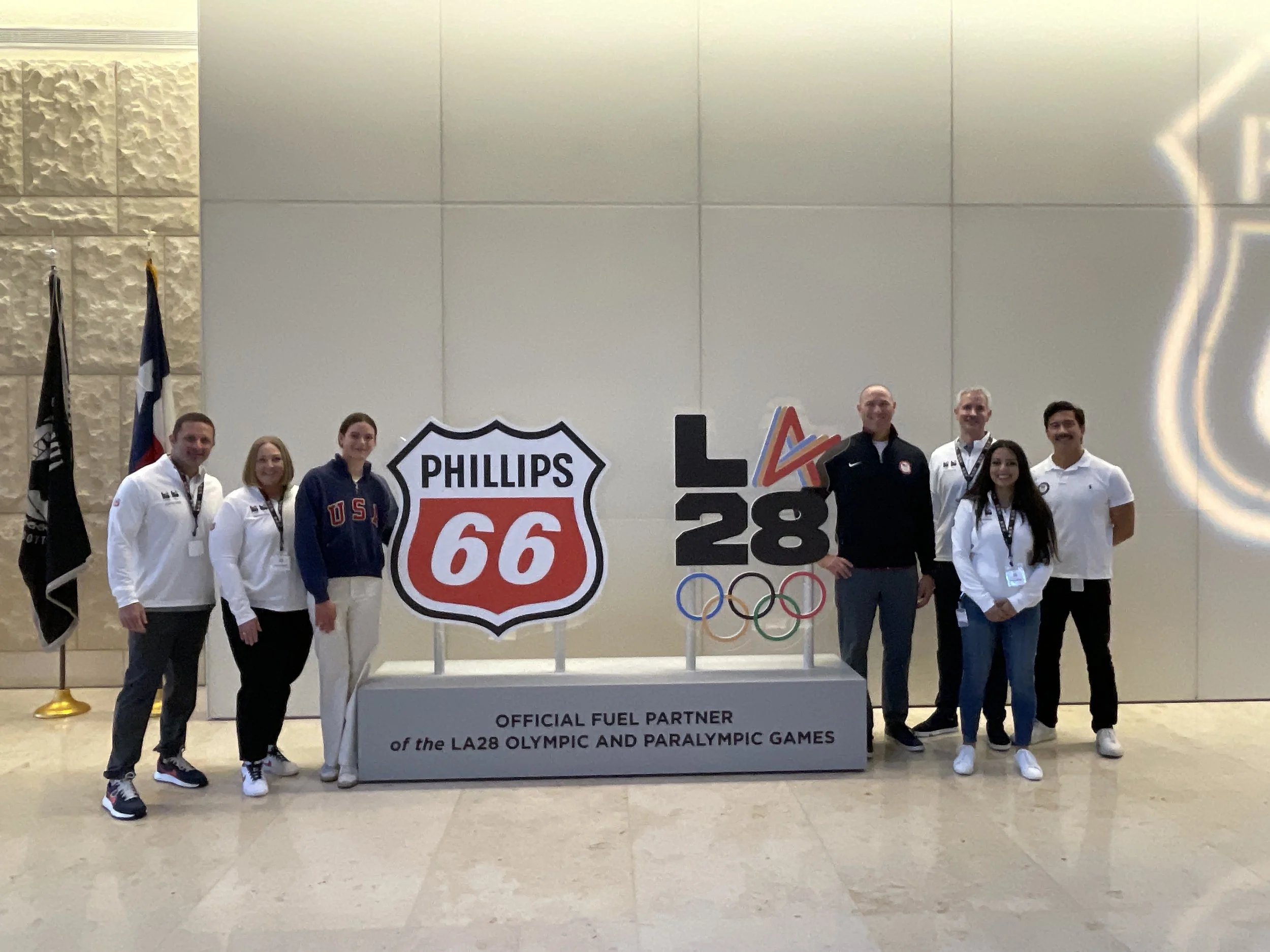
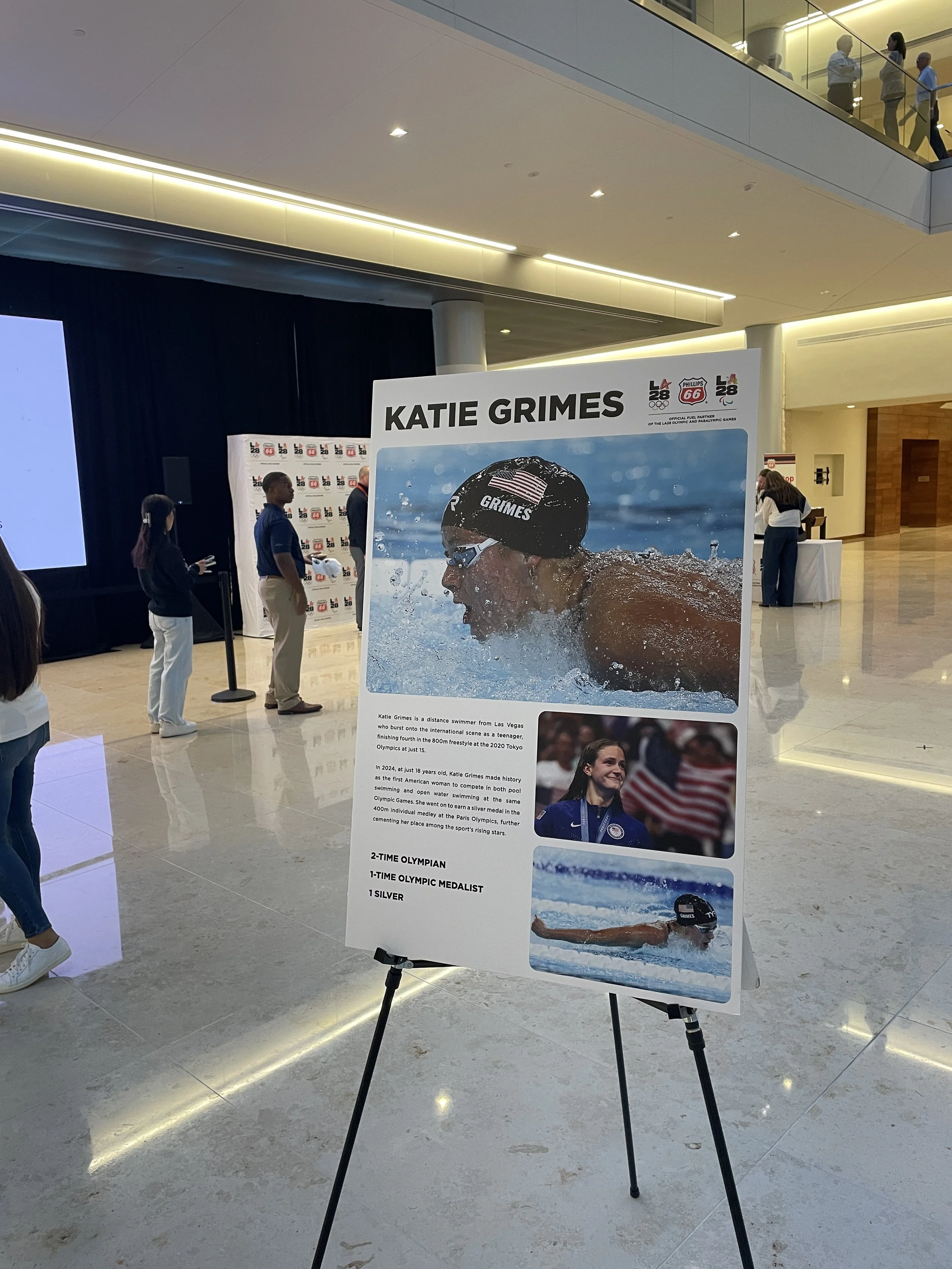
Phillips 66 just became the Official Fuel Partner of the LA28 Olympic and Paralympic Games. Instead of leading with a press release and a round of social posts, they did something smarter: they flew two of our clients — four-time Olympian and relay legend Jason Lezak, and two-time Olympian Katie Grimes — into their Houston headquarters for their internal employee kickoff. I came along too.
This one meant something extra to me personally. Phillips 66 was a longtime partner of USA Swimming when I was growing up, so walking into their building as part of the LA28 story felt like a full-circle moment — the kind you don't plan for in this business, you just get lucky enough to be standing in the room when it happens. I met everyone from their CEO down to their entire partnership team, which doesn't happen at most sponsor activations.
500-plus employees got to meet real Olympians, ask questions, and hear directly from the people behind the sponsorship. I was in the room for it, and the energy was unmistakable — this wasn't content built for a feed, it was a genuine moment for the people who actually work there. The whole thing ran two and a half hours and flew by; Jason and Katie were fantastic, and by the end people were lining up just to shake their hands.
Why this beats social media
Here's the uncomfortable truth: most companies that sponsor an Olympian default to social media because it's easy to produce and easy to measure. But if you're judging the partnership only by clicks and views, you're missing where the real value sits.
Bringing an athlete into your building — in front of your employees, your customers, or both — does something a post can't:
It's unrepeatable. Everyone in the room remembers it; nobody scrolls past it.
It reaches the people who matter most to your business directly, not through an algorithm.
It reinforces the why behind the sponsorship for your own team, not just your outside audience.
And this isn't just a large-company play. At CG Sports, we see this work even better with regional and local businesses — the smaller the room, the bigger the relative impact.
How to do it
If you're sponsoring an Olympic or Paralympic athlete and want to get this right, here's where to start:
Don't lead with content — lead with access. Before you brief an agency on a social campaign, ask whether the athlete could visit your office, store, or event instead.
Make it about your people first. An employee kickoff, an all-hands, or a customer appreciation event beats a press conference every time.
Let them interact. A Q&A or meet-and-greet lands harder than a scripted appearance.
Measure what actually matters. Don't just track impressions — track what your employees and customers say afterward. That reaction is the real signal the partnership worked.
Think beyond the big campaign. You don't need a Times Square billboard. A 500-person room in Houston was plenty.
The bottom line
If you're a new LA28 partner — or any company figuring out how to activate a sponsorship with an Olympian or Paralympian — don't start with "what should our campaign look like." Start with "how do we get this person in front of our people." That's where the lasting impact is.